
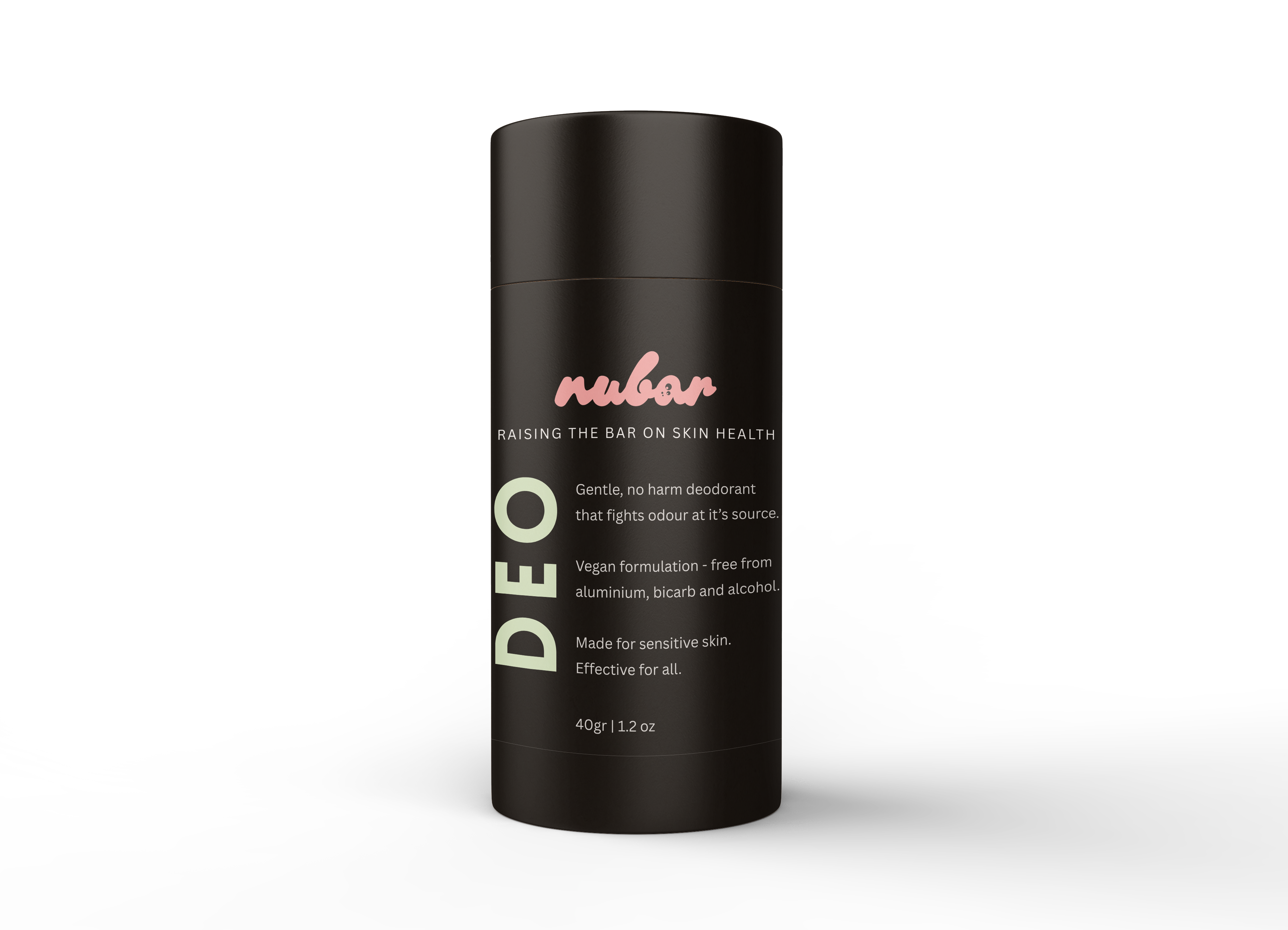

Our DEO bar's ingredients
VEGAN | SKIN SAFE | SCIENCE BACKED
Full list:
Maranta Arundinacea (Arrowroot) Root Powder, Coco-Caprylate, Squalane, Helianthus Annuus (Sunflower) Seed Wax, Kaolin, Mangifera Indica (Mango) Seed Butter, Zinc Ricinoleate, Cetearyl Alcohol, Triethyl Citrate, Tapioca Starch, Hydrogenated Castor Oil, Silica (Diatomaceous Earth), Silicon Dioxide, Myristyl Myristate, Jojoba Esters, Magnesium Myristate, Ricinus Communis (Castor) Seed Oil, Tocopheryl Acetate, Silver.

HERO - Silver
Neutralises the bacteria that cause nasty body odour for days at a time. The Silver we use is 99,9% pure metallic silver (not nano or colloidal silver).
Triethyl Citrate
Contains enzymes that break down the volatile organic compounds (VOCs) and other substances that cause unpleasant body odor, effectively reducing and preventing body odour.

Kaolin Clay
Acts as a natural, gentle absorbent to soak up moisture and sweat, helping to keep underarms dry. It also neutralises odour, provides a smooth, non-irritating texture for sensitive skin, and helps draw out impurities.
Zinc Ricinoleate
Derived from castor oil, it neutralises odour by trapping odour molecules rather than blocking sweat glands (like aluminium) or killing beneficial skin bacteria. It is highly regarded as a natural, non-irritating alternative for sensitive skin.
More on the best eco, natural deodorants in South Africa.

Why Wheat Straw Packaging Is a Win for the Environment
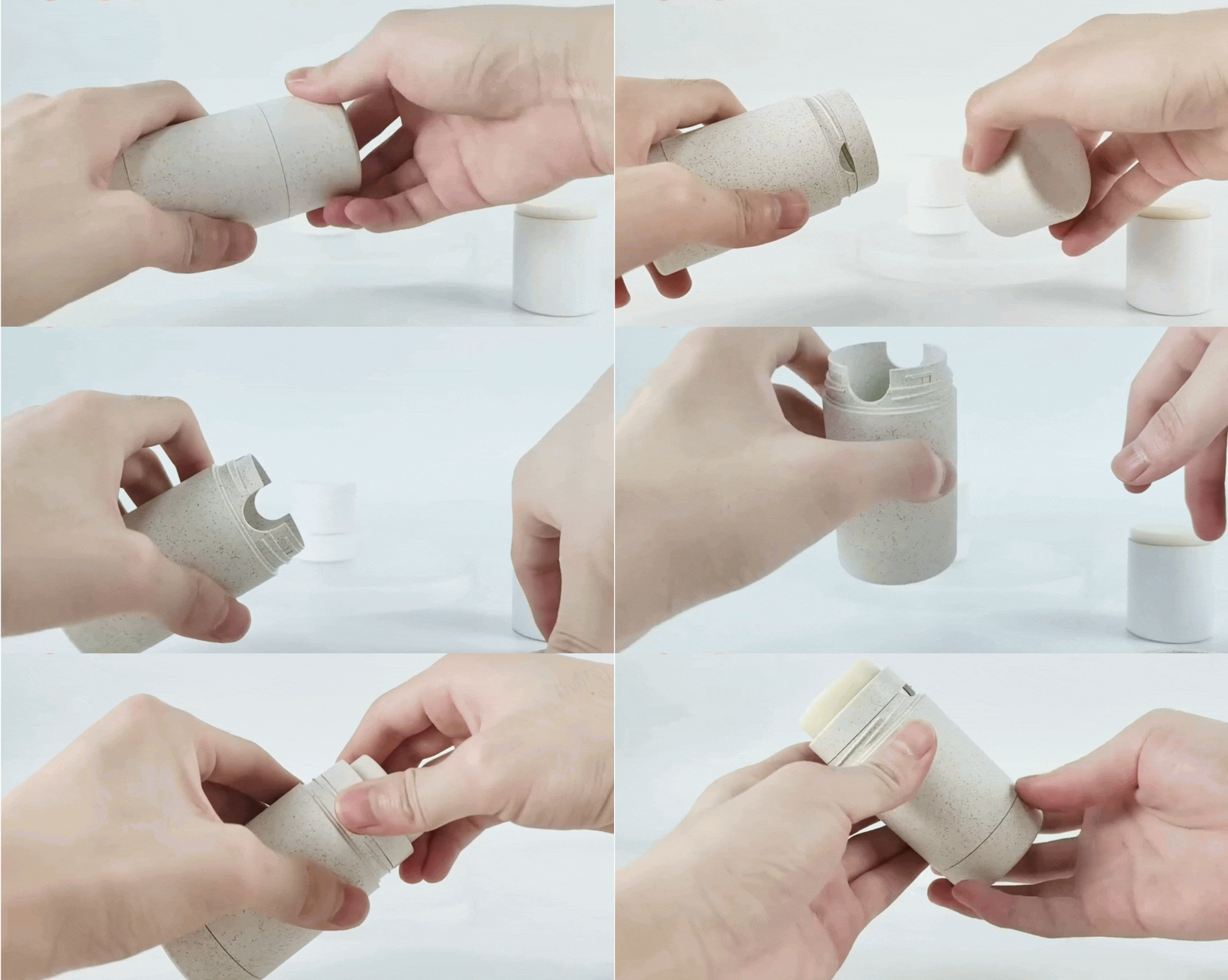
The wheat straw packaging we use for our Nubar DEO deodorant bar is a sustainable, biodegradable alternative to plastic that repurposes agricultural waste into durable, eco-friendly containers. Learn how it reduces carbon emissions, supports a circular economy, and helps protect the planet.

The Best Natural Deodorants That Actually Work, available in South Africa (2025)
Looking for an aluminium and bicarb free deodorant in South Africa? We’ve found the top local picks - including the game-changing Nubar DEO Bar with silver.

Why Most Natural Deodorants Don't Work – and Why Silver Changes the Game
Most natural deodorants fail to control odour. Learn why — and how the Nubar DEO deodorant bar's silver offers long-lasting, gentle, and effective odour protection without irritating your skin.

